The Loyalty Program Illusion: What Your Points Are Really Worth—And What You're Giving Up to Earn Them
The Points Evangelist in Every Office
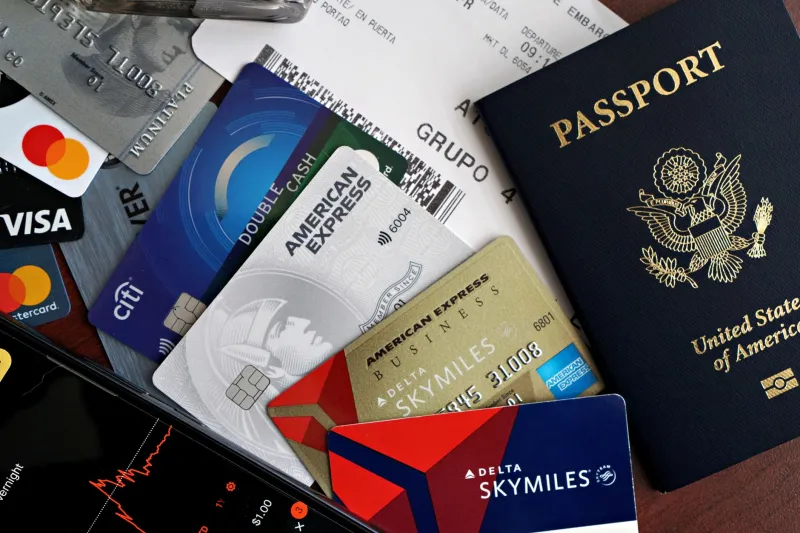
Every frequent traveler knows at least one. The colleague who books a specific card for the sign-up bonus, routes a flight through an inconvenient hub to hit status, and spends Sunday evenings cross-referencing award charts on travel forums. They speak fluently about transfer partners, sweet spots, and category upgrades. They are, by every metric they have chosen to measure themselves against, winning.
But winning at what, exactly?
The loyalty program industrial complex—built over four decades by airlines, hotel chains, and co-branded credit card issuers—has succeeded in convincing a significant portion of the American traveling public that accumulating points is a form of savings. It is not, at least not in the straightforward sense the marketing implies. It is a form of deferred, conditional, and increasingly uncertain value that frequently costs more to pursue than it returns.
This is not a fringe position. It is an increasingly well-documented conclusion that emerges when loyalty program economics are examined with the same rigor travelers apply to their actual travel budgets.
The Redemption Rate Reality
Loyalty programs are carefully constructed to appear more generous than they are. The headline numbers—earn ten points per dollar, redeem for one cent per point—suggest a straightforward value proposition. In practice, the calculation is far more complicated.
Airline miles, for instance, are not redeemable at a fixed rate. Their value fluctuates depending on the route, the cabin, the availability of award seats, and the program's current redemption chart—which can be revised without notice. Industry analysts who track average redemption values consistently find that most travelers redeem miles at rates significantly below the theoretical maximum the programs advertise. The traveler who accumulates miles imagining business-class redemptions frequently ends up booking coach awards on dates and routes with limited availability, at effective rates that compare unfavorably with discounted cash fares.
Hotel points follow a similar pattern. The major chains have progressively moved toward dynamic pricing models for award redemptions, meaning the points required for a given night fluctuate based on demand—just like cash rates. The result is that points accumulated during high-earning periods are frequently redeemed during high-demand periods, at elevated rates that erode their effective value.
A 2023 analysis by NerdWallet found that the average American loyalty program member holds points worth less than $150 in practical redemption value—a figure that reflects both the tendency to accumulate without redeeming and the consistent gap between theoretical and actual redemption rates.
The Opportunity Cost Nobody Calculates
The financial analysis of loyalty programs almost universally focuses on what points are worth. It rarely accounts for what they cost—not in dollars, but in decision-making constraints and time.
A traveler optimizing for points does not always book the best available rate. They book the rate that earns the most points, or the property that is on-program, or the flight that connects through a hub they would otherwise avoid. These decisions introduce friction, inefficiency, and sometimes genuine financial cost into the booking process.
Consider the traveler who books a co-branded hotel credit card's affiliated chain rather than a competing property offering a substantially lower cash rate. The points earned on the higher-rate booking may appear to offset the cost difference—until they are actually redeemed, at which point the gap between theoretical and actual value becomes apparent.
Then there is the time investment. Serious loyalty program optimization is not passive. It requires monitoring program announcements for devaluations, tracking transfer bonuses, researching award availability, and managing expiration dates across multiple programs. The travelers who extract the most value from loyalty programs are, by necessity, investing significant hours in doing so. That time has a cost that never appears in the points-per-dollar calculation.
For most American travelers who take two to four trips per year, the time spent on loyalty optimization would yield greater financial returns if redirected toward researching cash rates, flexible booking windows, and integrated platform discounts.
What Straightforward Booking Actually Offers
The alternative to loyalty program optimization is not indifference to price. It is a different kind of discipline—one focused on booking flexibility, transparent pricing, and the compounding benefit of making decisions based on actual cost rather than points potential.
Cloud-based booking platforms like BookingPortal operate on a model that prioritizes rate transparency and booking flexibility over loyalty mechanics. When a traveler can compare actual cash rates across properties in real time, apply platform discounts directly at checkout, and modify or cancel reservations without navigating program-specific rules, they are making decisions with full information rather than partial information filtered through a loyalty framework.
The traveler who books the lower-rate property and pockets the savings—rather than booking the higher-rate, on-program property for the points—has a real, spendable dollar advantage that does not expire, does not require a redemption window, and does not depend on award availability.
Over the course of a year of regular travel, this advantage compounds. The traveler optimizing for cash savings consistently spends less per trip than the traveler optimizing for points accumulation, even before accounting for the time cost of program management.
The Devaluation Risk That Never Gets Priced In
Perhaps the most underappreciated risk in loyalty program investing is devaluation. Airlines and hotel chains retain the unilateral right to change the terms of their programs—including the redemption rates for accumulated points—without prior notice. These changes are legal, common, and financially significant.
Over the past decade, virtually every major airline and hotel loyalty program has undergone at least one significant devaluation. Award charts have been restructured, peak pricing has been introduced, and partner redemption options have been curtailed. In each case, travelers who had accumulated points under one set of assumptions found their holdings worth meaningfully less under the new terms.
This is not a risk that exists in a straightforward cash-savings strategy. A dollar saved is a dollar retained, regardless of what any airline or hotel chain decides to do with its loyalty program next quarter.
A More Honest Framework for Evaluating Loyalty
None of this is to suggest that loyalty programs offer zero value. For travelers who fly frequently on a single carrier or consistently stay within a single hotel brand, status benefits—priority boarding, room upgrades, waived fees—can represent genuine, tangible value that is difficult to replicate through cash savings alone.
The argument here is narrower: that the obsessive optimization of points accumulation, pursued as a primary travel savings strategy, frequently costs more than it returns. And that the travelers who benefit most from loyalty programs are precisely those who would benefit least from optimizing them—the genuinely frequent travelers for whom status and points accrue naturally, without the deliberate routing, co-branded card juggling, and forum research that characterizes the points maximizer.
For everyone else—the two-trips-per-year traveler, the occasional business traveler, the family planning an annual vacation—the most financially rational approach is often the least glamorous one: book the best available rate through a transparent, cloud-integrated platform, take the savings in cash, and spend the Sunday evening doing something other than reading award chart updates.
The cloud remembers every booking you have ever made. It does not remember the points you almost had enough to redeem.